Jazeel: The Geometric Precision Reshaping Arabic Typography
In the realm of design, typography is rarely just about the shape of letters; it is about the personality of the content and the efficiency of the message. For decades, the world of Arabic typefaces has navigated a complex balance between preserving calligraphic tradition and embracing the demands of modern digital interfaces. Today, we are witnessing a significant shift toward typefaces that prioritize structural integrity and screen readability without sacrificing cultural authenticity. At the forefront of this movement is Jazeel, an Arabic font that leverages a solid geometric structure to deliver boldness and legibility in equal measure.
Jazeel represents a departure from the ornamental scripts that once dominated Arabic branding. It is not merely a font; it is a functional tool designed for the rigors of contemporary layout. As digital content consumption evolves, the demand for typefaces that perform reliably across various resolutions and devices has skyrocketed. Jazeel answers this call by offering a clean, geometric aesthetic that feels both modern and authoritative. Its design philosophy centers on the idea that clarity is the ultimate form of respect for the reader, making it a compelling choice for professionals ranging from educators to corporate marketers.
The Anatomy of Geometric Strength
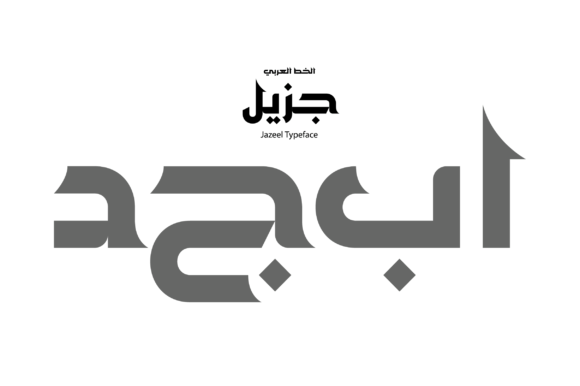
To understand the appeal of Jazeel, one must look at its construction. The font is built upon a solid geometric framework, meaning the letterforms rely on precise angles, circles, and straight lines rather than the fluid, unpredictable strokes of traditional handwriting. This architectural approach provides a sense of stability and order. In an era where users skim content rapidly, the brain processes geometric shapes faster than complex, cursive scripts. Jazeel’s structure minimizes visual noise, allowing the reader to absorb information with minimal cognitive load.
The boldness inherent in Jazeel’s design is another critical factor. In Arabic typography, weight is not just about thickness; it is about presence. A font must be heavy enough to anchor a layout but refined enough to avoid looking clunky. Jazeel strikes this balance by ensuring that the negative space within and around the letters is proportional. This careful calibration ensures that the text remains breathable, preventing the "ink trap" effect where text appears muddy or crowded. For graphic designers working on posters or large-scale print, this boldness ensures that headlines command attention, while for web developers, it ensures that text remains sharp even on lower-resolution mobile screens.
Legibility in the Age of Information Overload
Legibility is often conflated with readability, but they are distinct concepts. Readability refers to the ease of understanding a sentence, while legibility refers to the ease of distinguishing one character from another. In the Arabic script, where many letters share similar baseline shapes and differ only by dots or diacritical marks, legibility is a constant challenge. Jazeel addresses this by exaggerating the distinguishing features of its letters. The spacing is optimized, and the counters (the enclosed or partially enclosed spaces within letters) are open, making it easier to differentiate between similar characters at a glance.
This focus on legibility makes Jazeel particularly relevant for user interface (UI) design. As applications and websites become more complex, the need for a typeface that can guide the user’s eye without causing strain is paramount. Consider the dashboard of a financial app or the navigation menu of an e-commerce site. In these high-stakes environments, ambiguity is unacceptable. Jazeel’s clear letterforms ensure that buttons, labels, and notifications are instantly recognizable, reducing user error and improving the overall experience.
Adapting to Modern Workflows and Dual-Script Environments
One of the most practical advantages of a geometric font like Jazeel is its versatility in mixed-language environments. Many modern businesses and creators operate bilingually, requiring Arabic text to coexist harmoniously with Latin typefaces. Historically, pairing Arabic script with sans-serif Latin fonts (like Helvetica or Roboto) created visual dissonance because one was calligraphic and the other geometric.
Jazeel bridges this gap. Its geometric structure mirrors the anatomy of modern Latin sans-serifs. This alignment creates a cohesive visual identity for brands that need to communicate in both English and Arabic. For entrepreneurs designing a logo or a website, using Jazeel alongside a geometric Latin font ensures that the typographic voice remains consistent. This compatibility streamlines the design process, reducing the time spent tweaking kerning and leading to make two disparate scripts look like they belong on the same page.
Print vs. Web: A Versatile Contender
The versatility of Jazeel extends beyond its aesthetic appeal; it is technically robust for both print and web applications. In print media—such as magazines, brochures, and packaging—the sharp edges of Jazeel’s letters hold up exceptionally well. Unlike high-contrast serif fonts that can break or look fragile at very small sizes, Jazeel’s sturdy construction ensures it prints cleanly on various paper stocks and finishes. It retains its boldness without bleeding, making it ideal for high-quality editorial layouts.
On the web, performance is king. Fonts must load quickly and render perfectly across different browsers and operating systems. Jazeel’s simplified geometric curves are optimized for digital rendering engines. This means fewer artifacts and crisper lines on screens, whether viewed on a high-end Retina display or a standard office monitor. Furthermore, its legibility at smaller sizes makes it an excellent candidate for body text, not just headlines. While many Arabic fonts are relegated to large display sizes, Jazeel’s design allows it to function effectively in long-form content, providing a comfortable reading experience for blogs and news articles.
Current Trends: Minimalism and Functionality
The rise of Jazeel aligns perfectly with broader design trends favoring minimalism and functionality. The "flat design" era, characterized by clean interfaces and the removal of superfluous decoration, demands a typeface that complements this simplicity. Ornate, traditional scripts can feel out of place against a backdrop of minimalist icons and ample white space. Jazeel, however, integrates seamlessly into these environments. It acts as a neutral yet authoritative voice that supports the content rather than overwhelming it.
Moreover, the shift toward mobile-first design has altered how we view typography. With the majority of global web traffic coming from mobile devices, text must be legible on small, handheld screens. Jazeel’s open letterforms and consistent stroke width make it highly readable on mobile, reducing the need for users to zoom in. For marketers and content creators, this is a critical advantage. If your audience cannot read your message easily on their phone, they will likely scroll past it. Jazeel ensures that the message cuts through the noise.
Practical Implications for Creators and Businesses
For the modern professional, the choice of typeface is a strategic decision. For educators, Jazeel offers a clear, distraction-free font for e-learning platforms and textbooks, aiding student comprehension. For bloggers, it provides a fresh, modern look that signals professionalism and relevance. For business owners, it offers a brand voice that is confident and trustworthy.
Implementing Jazeel into a workflow is straightforward. Because it is designed to handle both headings and paragraphs, it eliminates the need for multiple font families, simplifying asset management. A designer can use a heavy weight for impact in a hero section and a regular weight for the supporting text, maintaining visual consistency throughout the user journey. This flexibility is particularly valuable for startups and freelancers who need to maintain a high-quality visual identity with limited resources.
The Evolution of Arabic Type Culture
The development of fonts like Jazeel marks a maturation in the Arabic typography market. We are moving away from a binary choice between "traditional" and "Westernized." Instead, we are seeing a synthesis—a style that respects the geometric roots of Islamic art and architecture while embracing the clean lines of the International Style. This evolution reflects a cultural confidence, a willingness to innovate within the boundaries of the script.
As technology continues to evolve, with high-DPI screens becoming the norm and variable font technology gaining traction, the structural integrity of Jazeel positions it well for the future. It is a font that does not rely on trends that will fade, but on the timeless principles of geometry and clarity.
Conclusion: A Foundation for Clear Communication
In a digital landscape saturated with content, clarity is a competitive advantage. Jazeel is more than just a collection of geometric shapes; it is a tool for effective communication. By prioritizing boldness and legibility, it empowers creators to deliver their messages with precision and style. Whether you are designing a corporate report, coding a new mobile app, or publishing a personal blog, Jazeel provides a solid foundation. It proves that in the world of typography, structure and beauty are not mutually exclusive—they are essential partners in the art of visual communication.