Poster Hand Brush: A Practical Evaluation for Handmade Typography
In the search for typefaces that convey authenticity and a human touch, designers often turn to handwritten styles. Poster Hand Brush is one such font, categorized as a playful handwritten marker typeface. It aims to replicate the energetic and imperfect strokes of a broad-tipped marker, designed to infuse a sense of fun and manual craft into digital projects. This article provides a practical evaluation to help you determine if this specific font aligns with your design objectives.
Understanding the Font's Core Characteristics
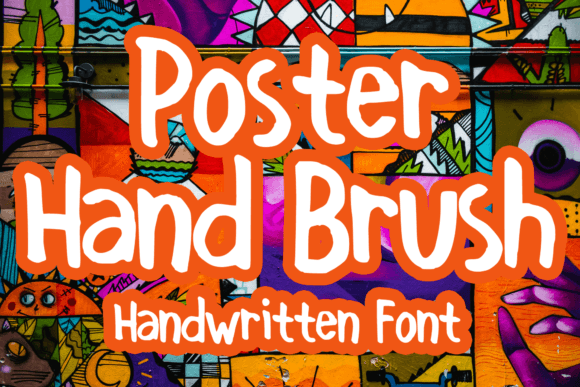
Poster Hand Brush is defined by its bold, continuous strokes and casual letterforms. It is not a formal script or a delicate cursive; its character is assertive and informal. The design prioritizes readability at larger sizes, making it a strong candidate for display use rather than body text. Its aesthetic is inherently cheerful and approachable, intended to evoke feelings of celebration, energy, and handcrafted quality. The font's name itself points to its primary application: creating impactful posters and banners where a bold, fun touch is required.
Reasons for Considering a Handwritten Marker Font
The interest in fonts like Poster Hand Brush stems from a desire to break away from sterile, digital-looking typography. In a landscape saturated with clean sans-serifs and polished serifs, a handwritten style can be a strategic differentiator. It communicates informality, creativity, and a personal connection. For projects targeting a younger demographic or those centered on leisure, crafts, or community events, this typographic style can resonate more effectively than a conventional choice. It serves as a visual shorthand for "this was made with care and personality."
Benefits and Practical Applications
The primary benefit of Poster Hand Brush is its immediate visual impact. Its bold weight and dynamic style command attention, making it highly effective for:
- Event Promotion: Summer parties, festivals, and casual gatherings where the atmosphere is lively and informal.
- Product Packaging and Branding: Particularly for artisanal goods, children's products, or brands with a playful identity. It works well on t-shirts, clothing labels, and stickers.
- Editorial and Book Design: Chapter titles, book covers, or internal quotes in genres like humor, self-help, or youth fiction where a personal tone is desired.
- Greeting Cards and Invitations: Birthday cards, thank-you notes, and casual invitations benefit from its warm and friendly character.
In these contexts, the font does more than display text; it contributes to the overall mood and narrative of the design.
Tradeoffs and Important Considerations
While versatile in its niche, Poster Hand Brush has limitations that require careful consideration. Its greatest strength—bold, playful expressiveness—can be a weakness in formal or minimalist contexts. Using it for a corporate report, a luxury brand's primary logo, or extended paragraphs would likely undermine the desired tone of professionalism and clarity.
Readability is context-dependent. At small sizes or in long blocks of text, the irregular letterforms can cause visual fatigue. It is best used for headlines, subheadings, or short phrases. Pairing is crucial. Combining it with a clean, neutral sans-serif or serif font for body text creates a necessary contrast that maintains readability while allowing the handwritten font to shine in its display role.
When Poster Hand Brush is a Strong Fit
Evaluate this font as a strong candidate if your project meets several of these criteria:
- The project's tone is informal, celebratory, or community-oriented.
- The primary use will be for large, short-form text like logos, headers, or call-to-action phrases.
- The target audience is children, teens, or adults in a casual, creative setting.
- The design goal is to convey energy, fun, and a handcrafted aesthetic.
If your project aligns with these points, Poster Hand Brush could effectively fulfill the typographic role you need.
When to Explore Alternatives
There are scenarios where other typeface categories would be more appropriate. Consider alternatives if:
- Clarity and formality are paramount. For legal documents, academic papers, or technical manuals, a highly legible serif or sans-serif is necessary.
- The design is minimalist or luxurious. Fonts with more refined, subtle characteristics or classic elegance would better support such aesthetics.
- Extended reading is required. Any project involving body text for articles, books, or websites should prioritize fonts optimized for screen and print reading at small sizes.
- You need a wide range of weights and styles. Most handwritten fonts offer a single style. If your project demands a full family (light, regular, bold, italic), a geometric sans-serif or humanist serif family would provide greater flexibility.
In these cases, a font like Poster Hand Brush would introduce visual dissonance and work against your project's goals.
Practical Decision-Making Insights
Before finalizing your choice, conduct a practical test. Set your key headline or logo text in Poster Hand Brush. Then, ask yourself:
- Does the tone match? Does the font's personality align with the message and brand voice?
- Is it legible in context? View it at the intended size and from a typical reading distance. Can it be read quickly and easily?
- How does it pair with other elements? Place it alongside your body text font, colors, and imagery. Does it integrate harmoniously, or does it clash?
- What is the longevity? Will this playful style remain appropriate for the project's lifespan, or could it feel dated quickly?
Answering these questions honestly will guide you toward a sound typographic decision.
Conclusion: Aligning Font with Function
Poster Hand Brush is a specialized tool within a designer's toolkit. Its value lies not in universal application, but in its ability to deliver a specific, impactful aesthetic. By objectively evaluating your project's tone, audience, and functional requirements against the font's inherent characteristics, you can make an informed choice. When used thoughtfully and in the right context, it can indeed help create designs that feel fabulous and full of cheering vibes, effectively bridging the gap between digital precision and human warmth.