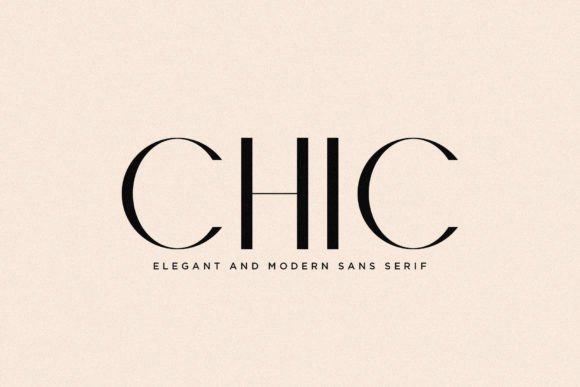
Chic: An Elegant Sans Serif for Modern Design
In the world of typography, a font is never just a collection of letters. It’s a voice, a tone, a first impression. Finding the right one can feel like searching for a missing puzzle piece. You know it exists, but where is it? For many designers and creators, that search ends with a typeface that balances modern clarity with timeless elegance. This is where Chic, an elegant and modern sans serif font, enters the conversation.
At its core, Chic is a sans serif typeface, meaning it lacks the small decorative strokes (serifs) at the ends of letters. This gives it a clean, contemporary feel. But what sets it apart is its distinct French style—a certain je ne sais quoi that blends sophistication with minimalism. The letterforms are crafted with graceful curves and a balanced weight, creating a rhythm that feels both refined and approachable. It’s a font that doesn’t shout; it speaks with confident, understated authority.
Understanding the Essence of Chic
Imagine the masthead of a high-fashion magazine, the logo for a boutique Parisian brand, or the elegant packaging for a luxury skincare line. These applications demand a typeface that conveys quality, style, and a sense of curated taste. Chic was designed precisely for these moments. Its aesthetic is rooted in the clean lines of modernism but infused with a softer, more artistic sensibility. This makes it incredibly versatile. It can feel bold and graphic when used in all caps for a headline, yet intimate and personal when used for a short quote or an invitation.
For a beginner just starting their design journey, Chic offers a significant advantage: it’s hard to make it look bad. Its inherent elegance provides a safety net. A novice creating a social media graphic for a small business can use Chic for the main text and instantly elevate the design’s professionalism without needing complex typographic knowledge. The font does much of the heavy lifting in terms of aesthetic appeal.
Why Different Audiences Are Drawn to This Font
The appeal of a typeface like Chic is not universal, but it is broad. Its value changes depending on who is using it and for what purpose. Let’s explore how various individuals might connect with it.
For the Visual Creator and Professional Designer
A graphic designer or art director evaluates fonts on technical and creative merit. They would examine Chic’s full character set—does it include a range of weights, from light to bold? Are there stylistic alternates or ligatures that allow for more unique compositions? They care about kerning (the spacing between letter pairs) and how the font behaves at very large and very small sizes. For them, Chic is a tool. Its value lies in its flexibility and quality. A professional might use the bold weight for a powerful magazine header and the light weight for elegant body text in a lookbook, ensuring visual harmony across a project.
For the Entrepreneur and Small Business Owner
A small business owner launching a fashion label, a café, or a consultancy has different priorities. Their primary concerns are presentation and commercial value. They need a brand identity that looks established and trustworthy from day one. Chic offers a solution. Using it for a logo, website headers, and business cards can create a cohesive and upscale brand image without the cost of a fully custom typeface. The decision here is less about technical nuance and more about the immediate impact and the feeling the font communicates to potential customers.
For the Blogger, Marketer, and Content Publisher
In the digital realm, bloggers and marketers prioritize readability and brand consistency. A lifestyle blogger might choose Chic for their article titles and pull quotes to create a signature, sophisticated look that sets them apart. The font’s clean lines ensure it remains legible on screens, which is crucial for user experience. For a marketer creating a presentation or a PDF lead magnet, Chic can make content feel more polished and valuable, subtly enhancing the perceived quality of the information being shared.
For the Educator and Hobbyist
An educator designing materials for a course on design principles might use Chic as a case study in modern typography. For a hobbyist creating a family recipe book or invitations for a special event, the font’s ease of use and beautiful default appearance are key. They don’t need to tweak settings extensively; they need a font that looks great right out of the box to make their personal project feel special and polished. The learning value for a hobbyist is in seeing how a well-designed typeface can transform a simple document.
Evaluating Chic for Your Project
So, how do you know if Chic is the right font for you? It comes down to aligning the font’s characteristics with your project’s goals and your own priorities.
- Project Type: Is it a fashion brand, a wedding invitation, a luxury product, a lifestyle blog, or a modern corporate report? Chic excels in contexts where elegance and contemporary style are desired. It might be less suitable for a children’s party flyer or a rugged, industrial brand.
- Desired Tone: What emotion or brand value do you need to convey? Chic communicates sophistication, clarity, and modern femininity. If your goal is to feel playful, retro, or hyper-masculine, other typefaces would be a better match.
- Technical Needs: Consider the practicalities. Do you need multiple weights for hierarchy? Will it be used primarily in print or digital? Always check the font’s license to ensure it covers your intended use, whether for a personal project or a commercial product.
- Flexibility vs. Specificity: Chic is a workhorse for elegant design, but it is not a neutral, all-purpose font like Helvetica. Its style is pronounced. Embrace that specificity if it matches your vision. If you need a font that can disappear into any context, you might look elsewhere.
Think of choosing a font like choosing an outfit. You wouldn’t wear a ball gown to a hiking trip, nor would you wear hiking boots to a gala. Chic is the elegant evening wear of the font world—perfect for the right occasion, where it allows you to present your best, most refined self.
Practical Applications and Final Thoughts
Let’s ground this in concrete examples. A freelance photographer could use Chic on their portfolio website to let the images take center stage while the typography adds a layer of professional polish. A small business owner of an artisanal soap company could use it on their product labels to convey natural luxury. A marketer could set a keynote presentation in Chic to ensure their data and stories are delivered with visual clarity and style.
The long-term usefulness of a font like Chic lies in its timelessness. While design trends come and go, a well-crafted sans serif with classic proportions endures. Investing in a quality typeface is investing in the longevity and cohesion of your brand or creative work.
Ultimately, Chic is more than just a set of characters. It’s a design decision. It’s for the creator who wants to infuse their work with a sense of effortless style, for the entrepreneur who needs to communicate quality instantly, and for the hobbyist who believes their personal projects deserve a touch of elegance. If your goal is to combine modern clarity with a sophisticated, French-inspired aesthetic, then exploring Chic is a worthwhile step in your creative process.