Gardenist: Bridging the Gap Between Classic Typography and Contemporary Design
In the current digital landscape, where visual noise is constant, the choice of typography has become a critical strategic decision for brands and designers. We have moved past the era where "clean" meant "sans-serif." Today, the pendulum is swinging back toward character, warmth, and distinctiveness, yet with a requirement for modern technical precision. This is where Gardenist enters the conversation. It is not merely a typeface; it is a sophisticated tool designed to merge the ornamental beauty of the past with the rigorous functionality required by today’s workflows.
The Resurgence of the Decorative Serif
For a long time, the design world was dominated by the neutrality of geometric sans-serifs. However, user expectations and market trends have shifted. Audiences are now seeking authenticity and personality in the brands they support. This has led to a resurgence in the popularity of serif typefaces, but with a caveat: they must be legible on screens and versatile across media.
Gardenist answers this call by offering a decorative serif aesthetic that feels curated rather than chaotic. It captures the "cottagecore" and organic luxury trends without sacrificing readability. By utilizing intricate decorative elements and flowing serifs, it provides a visual language that suggests tradition and craftsmanship. For a modern entrepreneur or a lifestyle blogger, this font offers a way to signal quality and attention to detail instantly.
Anatomy of Functionality: More Than Just Good Looks
While the visual appeal of Gardenist is evident, its true value lies in its utility. In professional design, a font that looks good but behaves poorly is a liability. Gardenist has been engineered with modern utility in mind, addressing common pain points in the design process.
The Power of Alternates and Ligatures
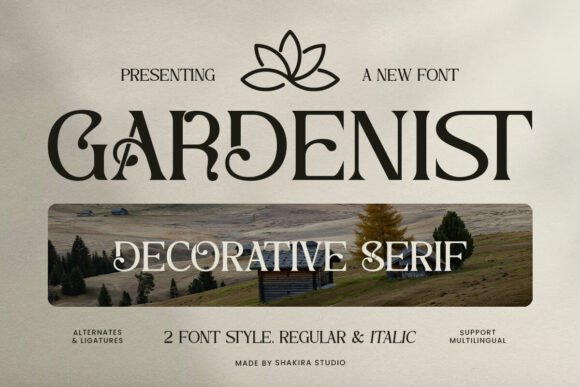
One of the defining features of Gardenist is the inclusion of stylish alternates and ligatures. In typography, a ligature occurs when two or more letters are joined into a single character to improve flow or aesthetics. Gardenist takes this a step further by offering stylistic alternates—different versions of specific letters.
This feature is crucial for avoiding the "cookie-cutter" look of standard fonts. For instance, when designing a logo or a wedding invitation, a designer can swap out standard letterforms for more ornate versions, creating a custom typographic flourish that feels bespoke. This level of customization allows for unique branding without the cost of commissioning custom lettering.
Technical Compatibility and Workflow
A significant hurdle with many decorative fonts is their lack of compatibility. Gardenist has been built to integrate seamlessly into modern workflows. It supports multiple file formats (OTF, TTF, and WOFF), ensuring it functions flawlessly whether you are working in Adobe Photoshop, Illustrator, or even Microsoft Office applications.
This cross-platform stability is essential for business owners who may need to use the font for internal documents as well as external marketing. The inclusion of multilingual support further enhances its utility, making it a viable option for global campaigns and diverse audiences.
Practical Applications: From Packaging to Digital Interfaces
The versatility of Gardenist allows it to bridge the gap between print and digital media. Here is how different professionals can leverage this typeface:
- Branding and Packaging: The ornamental nature of the font makes it ideal for food, beverage, and beauty products. It evokes a sense of heritage and natural ingredients, which aligns with current consumer preferences for organic and artisanal goods.
- Editorial Design: In magazines or blog headers, Gardenist serves as a striking display font. Its italic versions offer a dynamic contrast to the regular weight, allowing for hierarchical structures that guide the reader’s eye effectively.
- Digital Marketing: While decorative fonts are often avoided for body text, Gardenist excels in headlines and call-to-action buttons on websites. It grabs attention without being illegible, provided it is paired with a simpler sans-serif for body copy.
Evolving with the Creator Economy
The rise of the creator economy has democratized design. Entrepreneurs and freelancers are often responsible for their own visual assets. Gardenist is relevant to this demographic because it offers high-end aesthetics with low-barrier accessibility. You do not need a degree in typography to use it effectively; the font’s inherent style does much of the heavy lifting.
Furthermore, the inclusion of Regular and Italic versions provides the necessary flexibility to create contrast and emphasis, which are the building blocks of good design. This duality allows a single font family to handle multiple roles within a project, simplifying the design process and ensuring visual cohesion.
Conclusion: A Strategic Asset for Modern Design
Gardenist represents a thoughtful convergence of style and substance. It acknowledges the historical roots of typography while embracing the technological requirements of the present. For the modern creator, business owner, or designer, it is more than just a collection of glyphs—it is a means to communicate value, heritage, and elegance. By integrating Gardenist into your toolkit, you are not just choosing a font; you are adopting a versatile asset capable of transforming standard text into memorable typographic art.