Sanford Region: A Deep Dive into the Power of Condensed Slab Serif Design
In the vast digital landscape of typography, where thousands of new fonts emerge every year, finding a typeface that balances modern aggression with classic stability is a rare feat. For designers, business owners, and creators seeking to make an immediate impact, the choice of font is not merely aesthetic; it is a strategic decision. Enter Sanford Region, a condensed slab serif typeface designed to command attention. This article explores the anatomy, utility, and strategic application of this font, offering a comprehensive guide for anyone looking to inject a sense of authority and style into their projects.
Understanding the Anatomy of Sanford Region
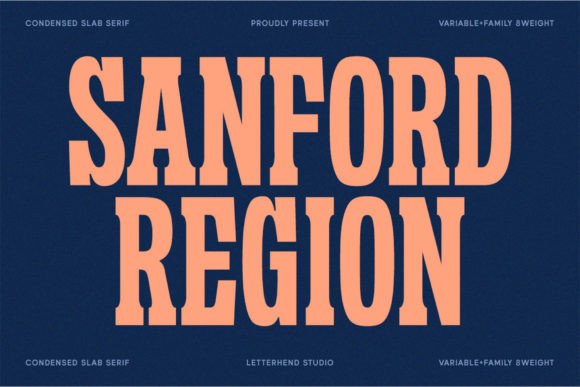
To appreciate the value of Sanford Region, one must first understand what defines a condensed slab serif typeface. Slab serifs are characterized by their thick, block-like serifs—those small strokes at the end of a main vertical or horizontal stroke. Unlike the delicate, hairline serifs of Times New Roman or Georgia, slab serifs project strength and durability.
When you add "condensed" to the mix, you are describing a font that is narrower than standard proportions. Sanford Region utilizes this vertical emphasis to create a "strong look and feel" that is distinct from wider, more traditional fonts. It is designed to occupy less horizontal space while maintaining a high degree of visual weight. This makes it an incredibly efficient tool for design, allowing you to fit more text into a headline without sacrificing readability or impact.
Key Visual Characteristics
- Vertical Emphasis: The condensed nature draws the eye upward, creating a sense of height and importance.
- Block-like Serifs: The serifs in Sanford Region are sturdy, grounding the letters and giving the text a solid foundation.
- High Contrast: While maintaining legibility, the interplay between thick and thin strokes creates a dynamic rhythm that feels professional.
- Modern yet Timeless: It avoids the dated look of 1970s disco fonts while steering clear of the sterile minimalism of modern sans-serifs.
The Strategic Purpose: Why Choose a Strong Typeface?
Typography is the voice of your design. Just as a speaker modulates their tone to convey urgency or importance, a designer uses fonts to set the mood. Sanford Region is the typographic equivalent of a confident, articulate speaker. It is not designed to whisper; it is designed to declare.
The primary purpose of this font is to serve as a visual anchor. In a world of scrolling feeds and fleeting attention spans, you have milliseconds to convince a user to stop and read. A condensed slab serif cuts through the noise. It offers a tactile quality—a feeling of "printed ink" or "stamped metal"—that digital-native fonts often lack. This physicality makes Sanford Region particularly effective for brands that want to appear established, reliable, and substantial.
Real-World Applications and Scenarios
The versatility of Sanford Region is one of its greatest assets. Because it is described as perfect for "logos, headlines, signage," it bridges the gap between digital and physical media. Let us explore specific scenarios where this typeface excels.
1. Branding and Logos
A logo must be memorable and scalable. Because Sanford Region is condensed, it allows for long brand names to be displayed prominently without wrapping to a second line. Imagine a construction company, a fashion boutique, or a tech startup. The font provides a "strong look" that suggests the brand is an industry leader. It works exceptionally well in uppercase, turning a simple name into a monolithic stamp of quality.
2. Editorial Design: Magazines and Books
Book covers and magazine layouts rely heavily on typography to set the genre. Sanford Region is ideal for non-fiction covers, thrillers, or high-fashion magazines. Its condensed form allows for stacking words to create dramatic, column-like headlines. For example, a magazine cover featuring a vertical stack of keywords—such as STYLE, POWER, 2024—using this font creates a sophisticated grid that is pleasing to the eye.
3. Signage and Environmental Graphics
Readability from a distance is crucial for signage. The thick strokes of Sanford Region ensure visibility, while the condensed shape maximizes space on banners, posters, and billboards. Whether it is a banner for a music festival, a menu board at a coffee shop, or directional signage at a conference, this font ensures the message is read clearly and quickly.
4. Packaging and Labels
On a crowded shelf, packaging must scream for attention. Sanford Region is perfect for labels on wine bottles, cosmetic jars, or gourmet food packaging. It evokes a sense of "premium" quality. The strong serifs suggest tradition, while the condensed form suggests modern efficiency. It is particularly effective for products that want to convey an industrial-chic or heritage aesthetic.
Who Benefits from Using Sanford Region?
The utility of this typeface spans across various professional disciplines. It is not limited to graphic designers; it is a tool for anyone communicating a message.
- Business Owners: If you are rebranding or launching a new product, using Sanford Region for your marketing materials can instantly elevate your perceived value. It tells customers you mean business.
- Content Creators and YouTubers: Thumbnails are the gateway to video content. High-contrast, condensed text is the standard for YouTube thumbnails because it pops against busy backgrounds. This font is an excellent choice for creators in the commentary, gaming, or education niches.
- Event Planners: For weddings, galas, or corporate events, the invitation sets the tone. While script fonts are traditional, a modern slab serif offers a chic, contemporary alternative for formal invitations and signage.
- Web Designers: While not meant for body text, Sanford Region is excellent for H1 and H2 tags on websites. It helps break up content and guides the user's eye down the page.
Evaluating Suitability: Strengths and Considerations
While Sanford Region is a powerful tool, it is essential to use it correctly. Understanding its strengths and limitations will help you integrate it seamlessly into your workflow.
The Strengths
The primary strength is visual density. It allows you to say more with less space. It is also highly versatile in terms of color; it looks stunning in stark black and white, but also holds up well when filled with textures or gradients. Furthermore, its "formal forms" capability makes it suitable for high-end applications like greeting cards and stationery, where a touch of elegance is required.
Practical Considerations and Limitations
The most critical rule of using Sanford Region is context. Because it is a display font (meant for headlines), it should rarely be used for body text. Setting a paragraph in a condensed slab serif will result in a "wall of text" that is exhausting to read. The eyes need space to breathe between lines, and condensed fonts can make text blocks feel claustrophobic.
Additionally, kerning (the space between letters) is vital. Tight kerning can make a condensed font look illegible. When using Sanford Region, ensure there is enough breathing room between the letters so the thick serifs do not bleed into one another visually.
Integrating Sanford Region into Your Workflow
For creators looking to implement this typeface, the process is straightforward. Most design software—from Adobe Photoshop and Illustrator to Canva and Figma—supports modern font installation.
- Pairing with Other Fonts: To avoid visual monotony, pair Sanford Region with a clean, geometric sans-serif font for body text. The contrast between the decorative, heavy slab serif and a light sans-serif creates a professional hierarchy. Fonts like Helvetica, Roboto, or Open Sans make excellent companions.
- Color and Background: This font thrives on high contrast. Use white text on dark backgrounds for a dramatic, cinematic look. Conversely, black text on a cream or light grey background gives it a vintage, letterpress feel.
- Spacing and Tracking: When setting headlines in all caps, consider slightly increasing the tracking (letter spacing). This turns Sanford Region from a blocky stamp into an elegant, spaced-out title, reminiscent of luxury fashion branding.
Conclusion: The Value of a Strong Foundation
In conclusion, Sanford Region is more than just a collection of vector points; it is a design solution for modern communication challenges. It addresses the need for space efficiency without sacrificing the "strong look and feel" required to establish authority. Whether you are designing a wedding invitation, branding a new startup, or laying out a magazine cover, this condensed slab serif offers a robust foundation.
By understanding its characteristics and applying it with strategic intent, you can leverage Sanford Region to create designs that are not only visually striking but also deeply effective. It stands as a testament to the enduring power of typography to shape how we perceive information, products, and brands.