Merchant Ledger: Harnessing the Power of Dark Aesthetic Typography
There is a specific kind of gravitas that comes with the written word when it is styled in Merchant Ledger. It is not just a font; it is a declaration. We often talk about typography as the "clothing" of language, and if that is the case, this blackletter Old English typeface is a suit of armor—imposing, intricate, and unmistakably authoritative. If you have been searching for a typeface that bridges the gap between medieval history and modern edge, understanding where and how to deploy this specific tool can transform your design projects from mundane to magnificent.
The Weight of History in Modern Design
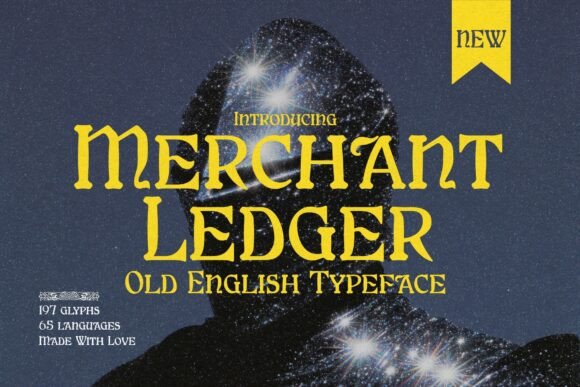
When you look at Merchant Ledger, you aren't just seeing curves and serifs; you are seeing the echoes of gothic tradition. The dramatic letterforms carry the visual DNA of ancient manuscripts and royal decrees. However, the genius of this typeface lies in its versatility. While it is deeply rooted in the past, it has been refined for contemporary application. It captures that raw, medieval mystique but balances it with a readability that allows it to function in modern branding contexts.
Consider the "dark academia" or "cottagecore" trends that have dominated visual culture recently. There is a hunger for textures that feel tangible and historical. Merchant Ledger fits perfectly into this niche. It offers a handcrafted aesthetic that digital fonts often struggle to replicate. It speaks of ink, parchment, and time—elements that add instant depth to any project.
Strategic Applications for Creative Professionals
Knowing a font exists is one thing; knowing how to wield it effectively is another. The true value of Merchant Ledger is realized when it is applied to the right context. Here is how different industries and creators can leverage its unique characteristics.
Branding and Visual Identity
For businesses that deal in heritage, craftsmanship, or niche luxury, this font is a goldmine. Imagine a craft brewery looking to distinguish itself on a crowded shelf. A logo set in Merchant Ledger immediately communicates tradition and quality. It suggests a recipe that has been perfected over generations.
The same applies to:
- Apothecaries and Perfumeries: The intricate details of the letterforms mimic the complexity of botanical blends and essential oils. It creates an atmosphere of mystery and potency.
- Barbershops and Tattoo Parlors: These industries rely heavily on a specific "vibe." This typeface provides the rugged, old-school authority that clients look for in these spaces.
- High-End Retail: Whether it is a bespoke tailor or a leather goods manufacturer, Merchant Ledger signals that the product is durable and classic.
Editorial and Publishing
In the world of publishing, the cover art does the heavy lifting before the reader even turns to page one. If you are designing a book cover for a historical fiction novel, a gritty fantasy saga, or even a collection of poetry, this typeface sets the tone instantly.
It is particularly effective for:
- Fantasy Genres: Think of the "Game of Thrones" aesthetic. You need a font that looks like it belongs on a map of a fictional kingdom or the header of a royal warrant.
- Music Packaging: From heavy metal album art to neofolk vinyl sleeves, the gothic aesthetic is a staple. Merchant Ledger provides the necessary drama and darkness to complement the audio experience.
Apparel and Merchandise
The streetwear and rock-and-roll fashion sectors have long utilized gothic typography to convey rebellion and cool. However, using standard, overused fonts can make a brand look generic. Merchant Ledger offers a fresh take on the classic blackletter style. Its boldness works exceptionally well on t-shirts, hoodies, and snapback caps where legibility at a distance is less critical than immediate visual impact.
The Art of Application: Practical Considerations
While Merchant Ledger is a powerful tool, it is also a specialized one. It carries a heavy visual weight, and using it incorrectly can overwhelm a design. Here are some practical observations on how to get the best out of it.
Contrast is Key
Because this typeface is so detailed and dramatic, it demands contrast. It works best when paired with a clean, minimalist sans-serif font. If you pair it with another decorative font, the result will likely be chaotic and difficult to read. Let Merchant Ledger be the star of the show—use it for headlines, logos, or drop caps—and let a simpler font handle the body text.
Scale and Spacing
Gothic letterforms are intricate. At very small sizes, the details can get lost or turn into ink blots. Therefore, it is rarely a good choice for body copy or legal disclaimers. It shines brightest at larger scales where the viewer can appreciate the craftsmanship of each letter.
Furthermore, tracking (the space between letters) is crucial. Because the letters in Merchant Ledger have complex shapes, they can feel crowded if the tracking is too tight. Loosening the spacing slightly often allows the design to breathe and improves legibility significantly.
Color and Texture
This font thrives in monochromatic color schemes. High-contrast black and white is the classic choice, evoking old newspaper prints or woodcuts. However, don't be afraid to experiment with textures. Overlaying Merchant Ledger on a distressed paper texture, a grainy photo, or a dark, moody background can enhance its tactile quality. It makes the text feel like it is part of the environment rather than just floating on top of it.
Audience Perception and Psychology
It is worth remembering that typography triggers psychological associations. When an audience sees Merchant Ledger, they subconsciously think of history, permanence, and seriousness. This is why it is such a strong choice for branding.
If you are a consultant or a financial advisor, you might think this is too "creative," but consider the name: Merchant Ledger. It evokes the image of a trusted tradesman recording his accounts—a symbol of reliability and commerce. For the right brand, this font doesn't just look cool; it builds trust.
Conversely, for a fantasy author or a game developer, the font triggers a sense of immersion. It acts as a portal, transporting the viewer to a world of swords and sorcery before they have read a single word of the story. Understanding this psychological trigger allows you to manipulate the mood of your project effectively.
Standing Out in a Saturated Market
We live in an era of flat design and geometric sans-serifs. While those styles are clean and functional, they can sometimes lack soul. Merchant Ledger is the antidote to visual monotony. It is unapologetically ornate.
Using this typeface is a bold move. It tells your audience that you value tradition, that you pay attention to details, and that you are not afraid to stand out. Whether you are crafting a logo for a local pub, designing a poster for a metal concert, or laying out a menu for a medieval-themed restaurant, this font delivers a message that is impossible to ignore.
Ultimately, the choice to use a blackletter font is a choice to embrace drama. Merchant Ledger provides the perfect vehicle for that expression, offering a blend of gothic severity and artistic elegance that few other typefaces can match. It invites your work to speak in the language of kings, crusaders, and legendary tradesmen, ensuring that your message is not just read, but felt.