The Art of the Ancient Page: Mastering the Medieval Knots Font
In the modern era of digital design, the quest for authenticity often leads us back to the roots of typography. We scroll through endless libraries of sans-serifs and geometric fonts, yet there remains a deep-seated appreciation for the intricate, hand-crafted aesthetic of the Middle Ages. This is where Medieval Knots enters the conversation, not merely as a typeface, but as a bridge between historical artistry and contemporary digital projects. It is an incredible blackletter font that does more than just spell out words; it evokes the very soul of the scriptorium.
Understanding the Aesthetic of Medieval Knots
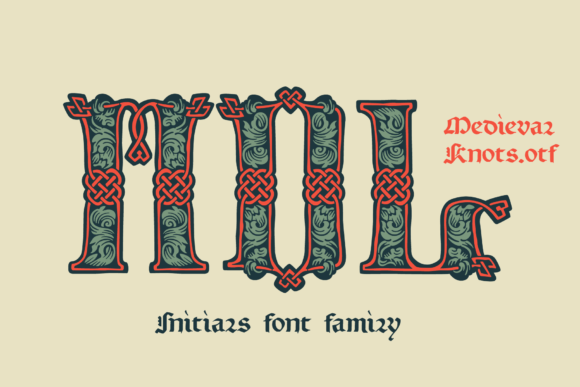
At its core, Medieval Knots is a specialized tool designed to capture the essence of Celtic knotwork and illuminated manuscripts. Unlike standard blackletter fonts that simply mimic the heavy, angular strokes of Gothic calligraphy, this font incorporates the complex, looping geometries of Celtic initials. These are the decorative capitals that once began the chapters of sacred texts, requiring hours of meticulous labor by monks and scribes.
The font is all you need to precisely imitate medieval-style text because it understands the hierarchy of the page. In the historical context, a page was not a uniform block of text. It was a landscape of visual weight, where the beginning of a section demanded reverence and visual dominance. Medieval Knots provides that dominance. Its glyphs are designed with intricate lines that weave over and under themselves, creating a visual rhythm that is both mesmerizing and structurally sound.
The Anatomy of a Blackletter Initial
To truly appreciate what Medieval Knots offers, one must look at the anatomy of the characters. The font features heavy vertical strokes characteristic of the Textura style, but these are embellished with flourishes that extend into the margins. This is not just a font; it is a graphic element. When you install and activate Medieval Knots, you are effectively installing a library of vector art.
- High Contrast: The interplay between thick stems and hairline details mimics the pressure of a broad-nibbed pen.
- Interlacing: True to its name, the letterforms feature lines that cross over one another, a hallmark of Insular art styles.
- Encapsulation: Many of the initial letters are designed to fit within a square or rectangular bounding box, making them perfect for drop caps in digital layouts.
Practical Application: The Drop Cap Strategy
The most effective way to utilize Medieval Knots is through the technique of the drop cap. This is a typographic device where the first letter of a paragraph is enlarged and styled differently from the rest of the text. However, using a decorative font for an entire paragraph is a common mistake that leads to illegibility. The complex nature of Celtic knots makes long-form reading difficult and visually exhausting.
Instead, the practical workflow involves a dual-font approach. You should use Medieval Knots as a decorative element at the beginning of a paragraph or section, while the rest of the paragraph should be written with a regular blackletter font or a highly legible serif. This contrast creates a visual hierarchy that guides the reader's eye. The ornate initial grabs attention, and the body text delivers the message.
Step-by-Step Implementation
- Select Your Initial: Type the first letter of your chapter or section using Medieval Knots. Scale it up significantly—usually 200% to 400% larger than the body text.
- Align the Baseline: Ensure the bottom of the decorative letter aligns with the baseline of the third or fourth line of your body text. This creates a grounded, professional look.
- Color and Texture: Consider adding a subtle texture to the Medieval Knots letter. Since the font relies on line work, a slight paper texture overlay can make the digital vector look like pressed ink.
- Complementary Body Text: Pair the initials with a "Textura" or "Rotunda" style blackletter font for the body. Avoid using the knot font for the body text at all costs to maintain readability.
Modern Workflows and Digital Projects
While the inspiration is ancient, the application of Medieval Knots is thoroughly modern. This font finds a home in a variety of digital industries where "theming" is essential to user experience.
For game developers, particularly those working in the RPG, Fantasy, or MMORPG genres, Medieval Knots is an invaluable asset. It can be used for title screens, chapter headers in lore books, or UI elements for inventory screens. It instantly communicates a setting of high fantasy and ancient history without the need for lengthy exposition.
In the world of branding and logo design, the font serves a specific niche. Breweries, wineries, artisan bakeries, and historical reenactment groups often seek a logo that implies tradition, craftsmanship, and heritage. By using Medieval Knots for the initial capital of a brand name, designers can inject a sense of established authority. However, it is crucial to balance this with modern design principles so the brand doesn't look dated, but rather "classic."
Crafting and Hobbyist Uses
Beyond professional design, the font has gained popularity in the crafting community. Scrapbookers and journal enthusiasts use Medieval Knots to create headers for travel journals or historical projects. The font translates well to physical media, particularly when used with cutting machines like Cricut or Silhouette. Because the lines are distinct and bold, they cut cleanly from vinyl or cardstock, allowing crafters to create intricate decals or stencils based on the font's geometry.
Technical Considerations and Readability
When working with Medieval Knots, there are technical factors to consider to ensure the final product is successful. The primary challenge with blackletter fonts is "noise." Because the Celtic knot style involves many intersecting lines, the letterforms can become muddy if the resolution is too low or the font size is too small.
Resolution Matters: Always use Medieval Knots at a high resolution. If you are designing for the web, ensure the image quality is high enough that the fine lines of the knots do not pixelate. If you are printing, vector formats (SVG or PDF) are preferred over rasterized images to preserve the crispness of the lines.
Spacing and Kerning: Decorative fonts often require manual kerning adjustments. The serifs and flourishes of Medieval Knots may extend beyond the standard bounding box of the character. You may need to adjust the spacing between this decorative letter and the subsequent body text to prevent the knot from crashing into the words that follow it.
Choosing the Right Context
Not every project calls for the complexity of Medieval Knots. It is important to assess the "voice" of your project. This font speaks of gravity, history, mysticism, and tradition. It is ill-suited for modern tech startups, medical brochures, or minimalist architecture portfolios.
However, if your project involves storytelling, fantasy, history, or a desire to evoke a sense of the "old world," this font is a perfect fit. It serves as a visual anchor, grounding the viewer in a specific time and place.
Consider the emotional response you want to elicit. When a user sees a header written in Medieval Knots, they should feel a shift in tone. They should understand that what follows is meant to be read with a different mindset—perhaps more slowly, with more attention to detail, as one would read a sacred text or a grand epic.
Maintaining the Balance
The ultimate goal of using a specialized typeface like Medieval Knots is balance. It is easy to overuse a font that is visually striking. If every heading, subheading, and initial is written in this intricate style, the design becomes overwhelming. The eye has nowhere to rest.
Therefore, treat Medieval Knots as a spice rather than the main ingredient. Use it sparingly to maximize impact. A single, perfectly rendered drop cap at the beginning of a chapter is far more powerful than a page full of tangled text. By respecting the font's complexity and pairing it with cleaner, more legible typefaces for the body, you honor the tradition of the medieval scribes who knew that the beauty of a page lay in the harmony between the ornate and the ordinary.